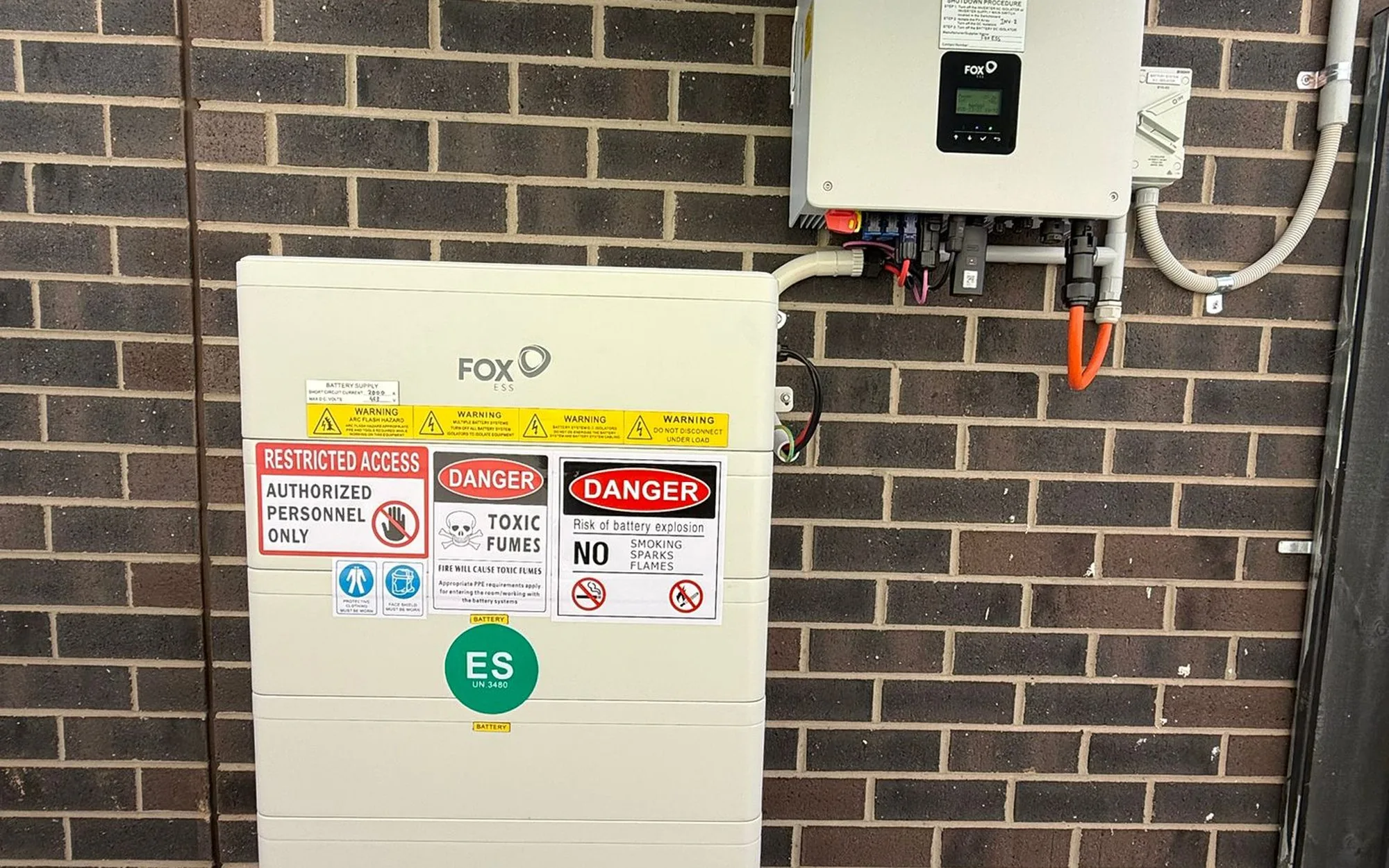
Most solar homes export their cheapest power at midday and buy it back at four times the price after dinner. A battery closes that gap — and keeps the fridge running when the street goes dark.
Storage isn't right for every household. Where it is, this is usually why.
Run 6pm to 11pm — the most expensive block of the day — on power you generated for nothing at lunchtime.
Nominated circuits — fridge, lights, internet, a power point or two — stay live through an outage, switching over in milliseconds.
The more of your own generation you consume, the less a retailer's next tariff change matters to your household.
Live app monitoring of generation, storage, import and export — so you can actually check the system is doing its job.
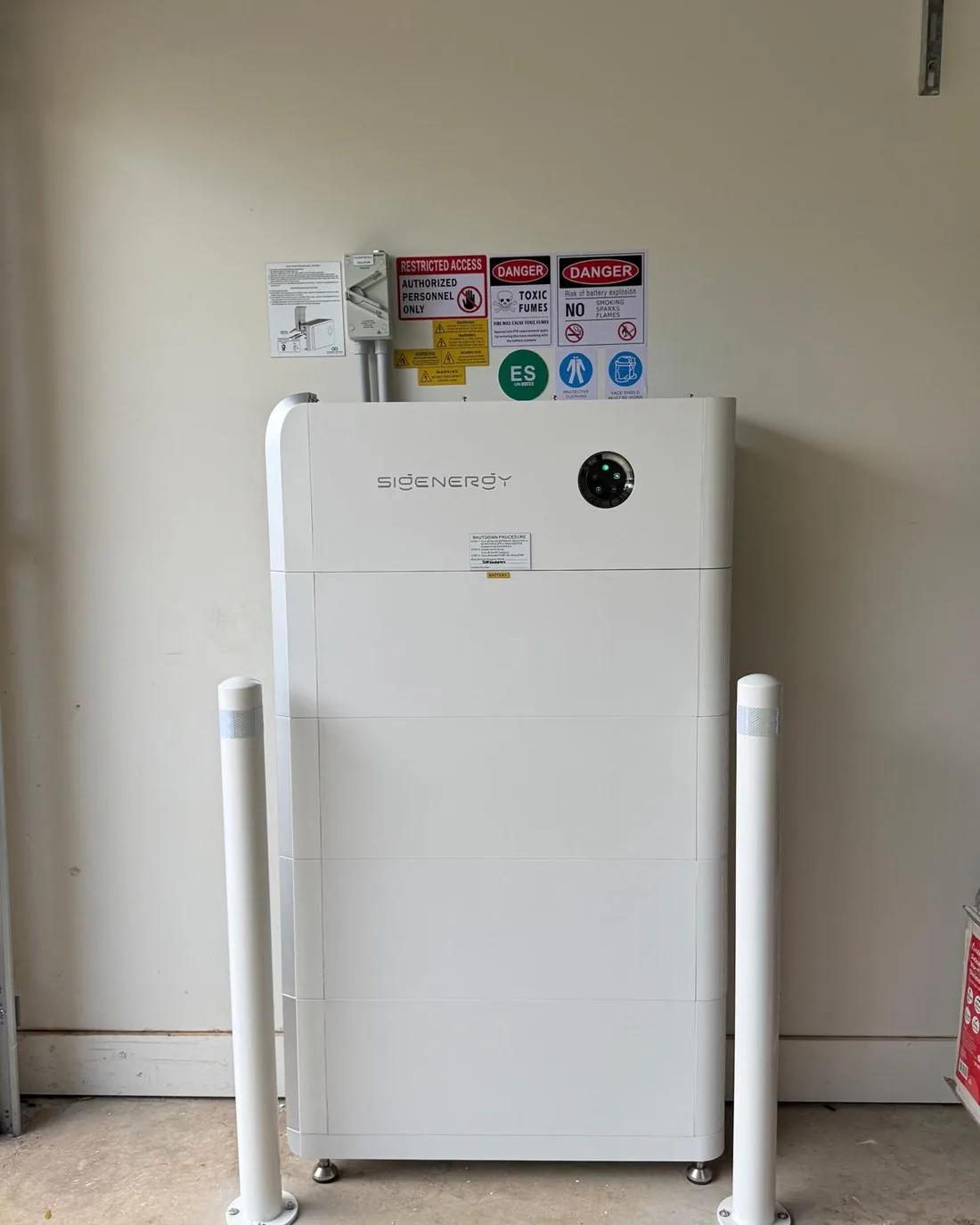
An oversized battery spends half the year never reaching full charge. We size it against the evening load it actually has to carry.
The inverter makes these decisions automatically, thousands of times a day. You just see a smaller bill.
Solar wakes up and covers the kettle, the shower pump and the morning rush. Anything spare starts filling the battery.
Peak generation. The house takes what it needs, the heat pump runs its cycle, the battery tops up and only the true surplus is exported.
Generation drops as the peak tariff starts. The battery takes over and runs cooking, heating, lighting and screens from stored solar.
Standby loads sip from what's left. If the battery empties before dawn, the system draws from the grid at the cheapest available rate.
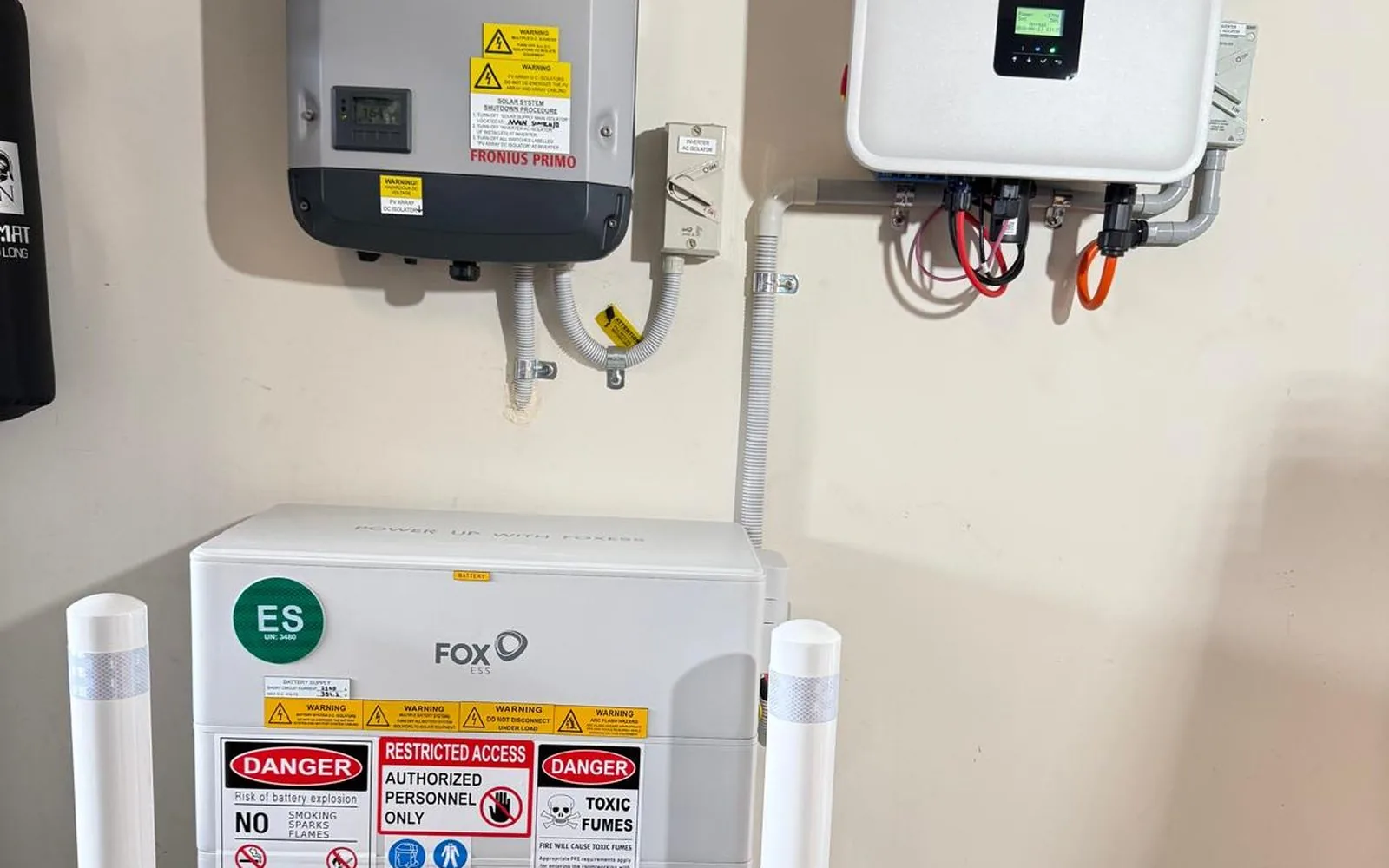
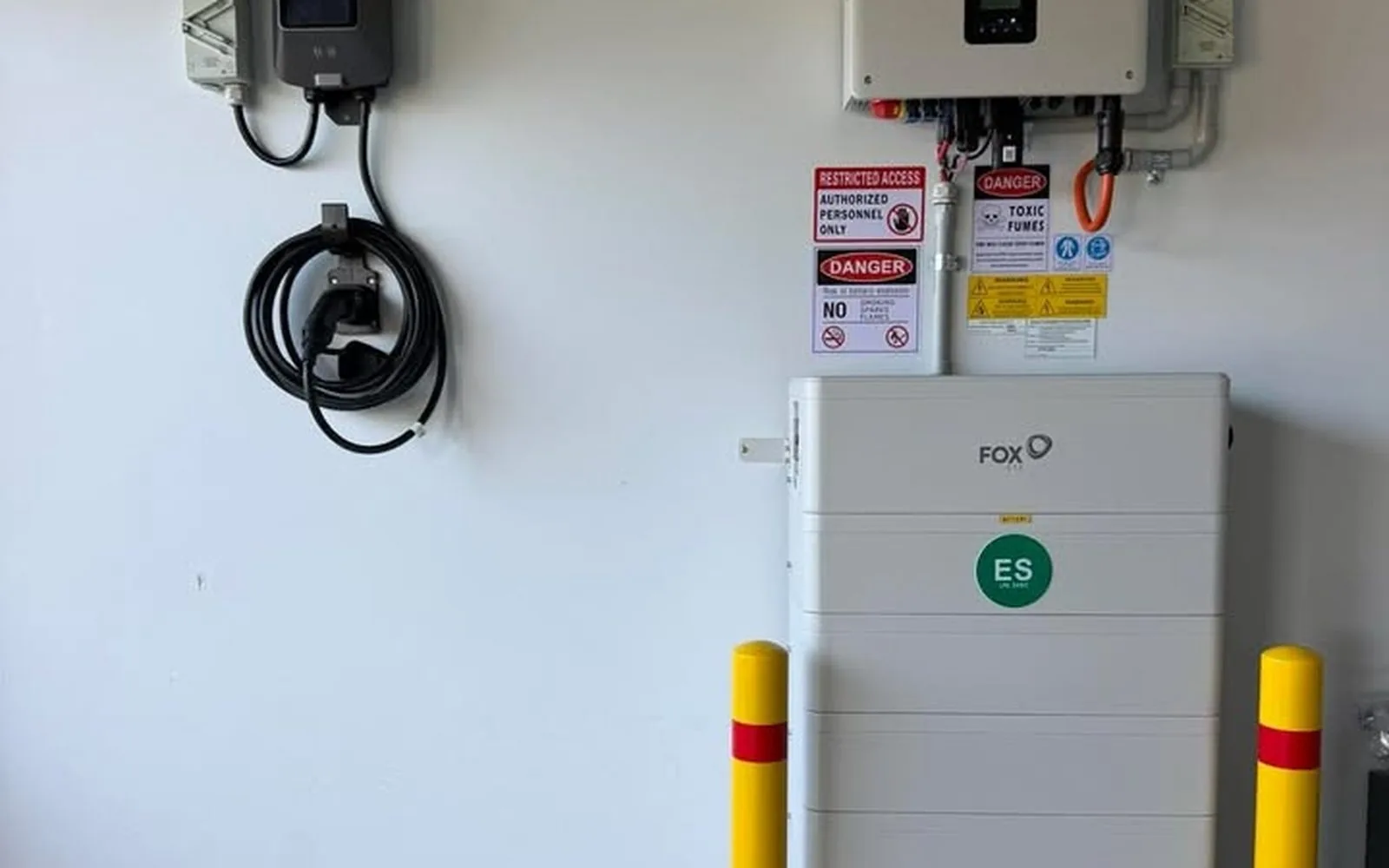
Adding storage to an existing array is routine work. Which route we take depends on the inverter already on your wall.
The batteries we install are warranted for around ten years or a stated number of cycles, whichever comes first, with a guaranteed remaining capacity at the end of that period — usually about 70%. In practice a household battery cycles roughly once a day, so warranty terms and real use line up fairly closely.
Usually not the whole house, and that's deliberate. We wire an essential-services circuit — typically the fridge, lighting, internet and a few power points — so the stored energy lasts hours rather than minutes. Large loads like ducted air conditioning, ovens and electric hot water stay off the backup circuit unless you specifically ask and the battery is sized for it.
Most commonly on an external wall in the shade, in a garage, or on a plinth beside the meter box. Australian standards restrict installing batteries on habitable-room walls and in some ceiling and roof spaces, so we walk the property with you and agree the location before the quote is finalised.
Most of the batteries we install are VPP-capable. Joining one can add a credit for letting a retailer draw on your stored energy at times of grid stress — but it also means less control over your own charge level. We'll explain the trade-off and make sure the hardware keeps the option open either way.
Barely. Most units are fan-cooled and only audible when working hard on a hot day — comparable to a quiet fridge. Placement still matters, so we avoid putting one directly outside a bedroom window where we can.
Send through a recent bill and we'll model storage against your actual usage — including the case where the numbers say wait.