

1–2 people
170 L
Couples, units and downsizers. Compact footprint that fits comfortably down a side passage.
- Around 2–3 showers back to back
- Smallest external footprint
- Ideal where space is tight

A heat pump doesn't make heat — it moves it, pulling warmth out of the outside air and putting it into your tank. That's why it does the same job for roughly a quarter of what an electric element costs to run.
It's the same physics as your fridge — just pointed at your hot water tank instead of the milk.
A quiet fan pulls outside air across an evaporator. Even a 5 °C Melbourne morning holds far more usable heat than you'd expect.
Refrigerant in the coil boils at a very low temperature, absorbing warmth from that air as it changes state to a gas.
A compressor squeezes the gas, which concentrates the heat and pushes its temperature well above what the tank needs.
The hot gas passes through a condenser wrapped around the tank, handing its heat to your water — then the cycle starts again.


Whatever's currently sitting beside your house, here's the honest comparison.
Hot water demand tracks people and habits far more closely than floor area.
Couples, units and downsizers. Compact footprint that fits comfortably down a side passage.
The size most Victorian families land on. Covers a morning rush and still has capacity for the evening.

Big households, share houses, or homes with a spa bath and teenagers who take long showers.
Efficiency figures are quoted at mild temperatures. We choose units on how they behave at 2 °C, not 20 °C.
Units rated to keep working efficiently down to around −5 °C, so the backup element stays idle on frosty mornings instead of quietly running your bill up.
Sound power ratings checked against where the unit will actually sit — because "quiet" outside a laundry is not the same as quiet outside a bedroom.
Timers and solar-diverting controls so the heating cycle runs between 10am and 3pm, using generation you'd otherwise export for a few cents.
Brands with an Australian spare-parts chain. A great efficiency rating means nothing if a controller board takes four months to arrive.
Old unit removed and disposed of, new slab or base where needed, tempering valve replaced, and the site left tidy — usually inside half a day.
Where your household and property qualify, we handle the certificate assignment and show the discount on the quote rather than after the fact.
No. A heat pump uses far less electricity than an electric element regardless of where that electricity comes from, so it cuts costs on its own. Solar simply makes it better — schedule the heating cycle for the middle of the day and much of your hot water effectively becomes free.
Yes. There's usable heat in air well below zero, and the units we install are specified for cold-climate operation. Efficiency does drop as it gets colder, which is exactly why we look at low-temperature performance data rather than the headline figure measured at 20 °C.
Typically half a day. The old unit is drained and removed, the base prepared if needed, the new unit set, plumbed and wired, and the system commissioned. You'll usually have hot water again the same afternoon.
Outdoors, with clear airflow around the fan and a path for condensate to drain. Most often it goes exactly where the old tank sat. Integrated units keep the tank and compressor in one body; split systems put a smaller compressor outside with the tank nearby, which helps when access is awkward.
Very little. Keep the air intake clear of leaves and garden growth, and have the pressure-relief valve and anode checked at the interval the manufacturer specifies — much the same servicing any storage hot water system needs. We can fold that into an annual visit alongside a solar health check.
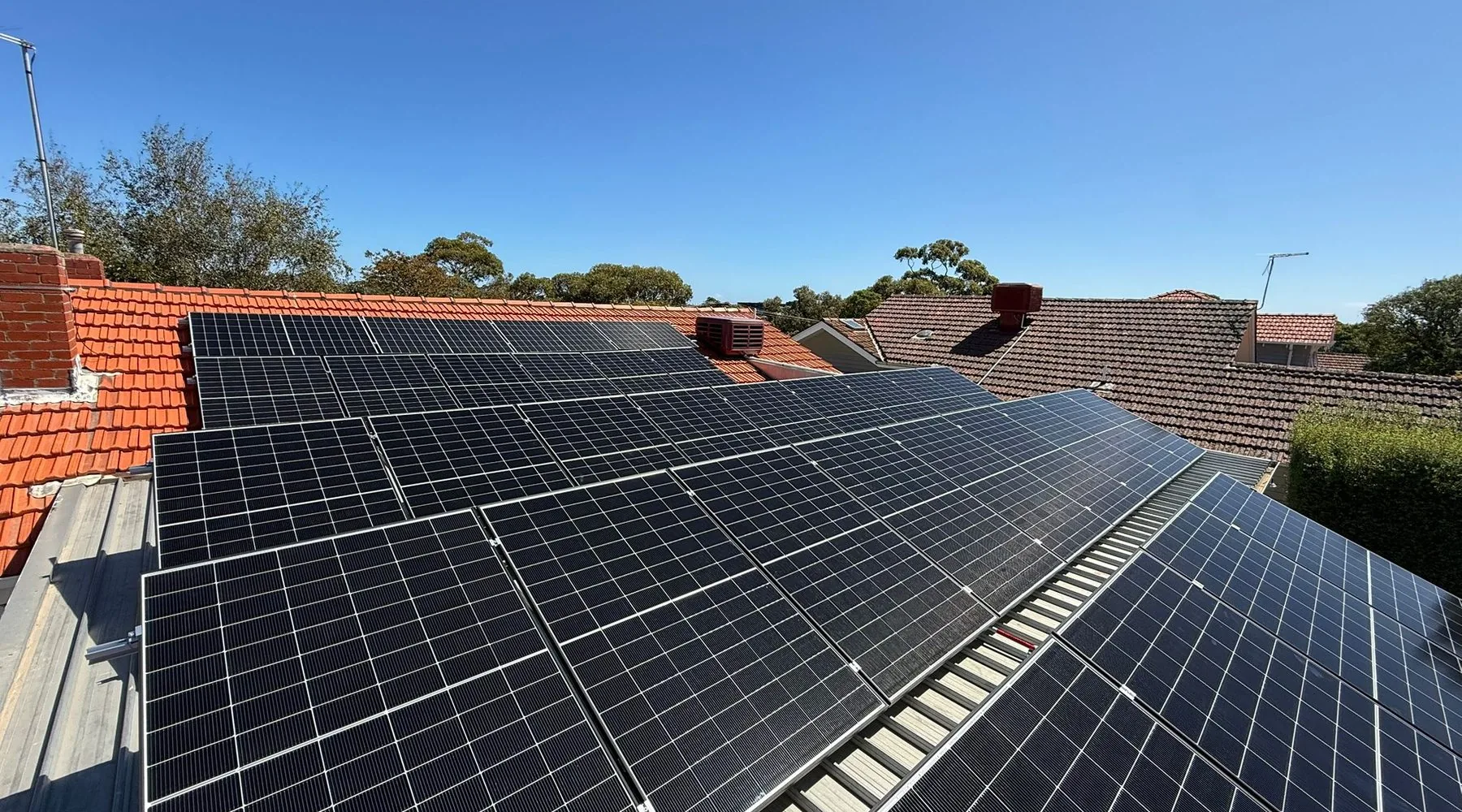
Tell us what's there now and roughly how many people are in the house. We'll come back with the right tank size and a fixed price.